Which channel works best for patient recall, text message, email, or phone call?
Each channel has a job. The practices that do recall well use all three in a deliberate order rather than picking a favorite.
Text messages for reach and speed
Texts get opened quickly and read almost immediately by most people, which makes them the natural first touch for recall. A short message with the practice name, the reason (you are due for a checkup), and one clear way to book is enough. Texts work best for patients who have opted in, who have a mobile number on file, and who already trust the practice. They work worst as a first contact with a patient who has not heard from you in years. Related: Why Patient Recall Matters for Care and Revenue
The limits are real. Texts are short, they are not a secure channel, and they can be filtered by carriers if your practice's number is not registered for business messaging. Keep clinical detail out of them, keep them under a few sentences, and make sure every automated text supports STOP and HELP replies. If a patient replies with a question, a person should answer, not a bot.
Keep reading: Why Patient Recall Matters for Care and Revenue, Building a Recall System That Works, Reminders That Patients Appreciate, Not Resent. See how DueVisit helps you recall reminders for patients due for a checkup.
Email for detail and for patients who prefer it
Email is where you can explain. A recall email can say what the visit involves, how long it takes, what insurance typically covers, and what to bring, with a booking link that carries the patient straight to available times. It is the right channel for patients who told you they prefer email, for longer explanations after a text has landed, and for families managing several appointments at once. Related: Reminders That Patients Appreciate, Not Resent
Email's weakness is attention. It competes with everything else in the inbox, and recall emails from a practice the patient has not seen in a while can look like marketing. Use a recognizable sender name, a plain subject line that names the practice and the purpose, and no images that make the message look like a promotion. Expect a slower response than a text and plan the follow-up cadence accordingly. Related: Recall and Patient Loyalty
Phone calls for the patients who matter most and the ones who are hardest to reach
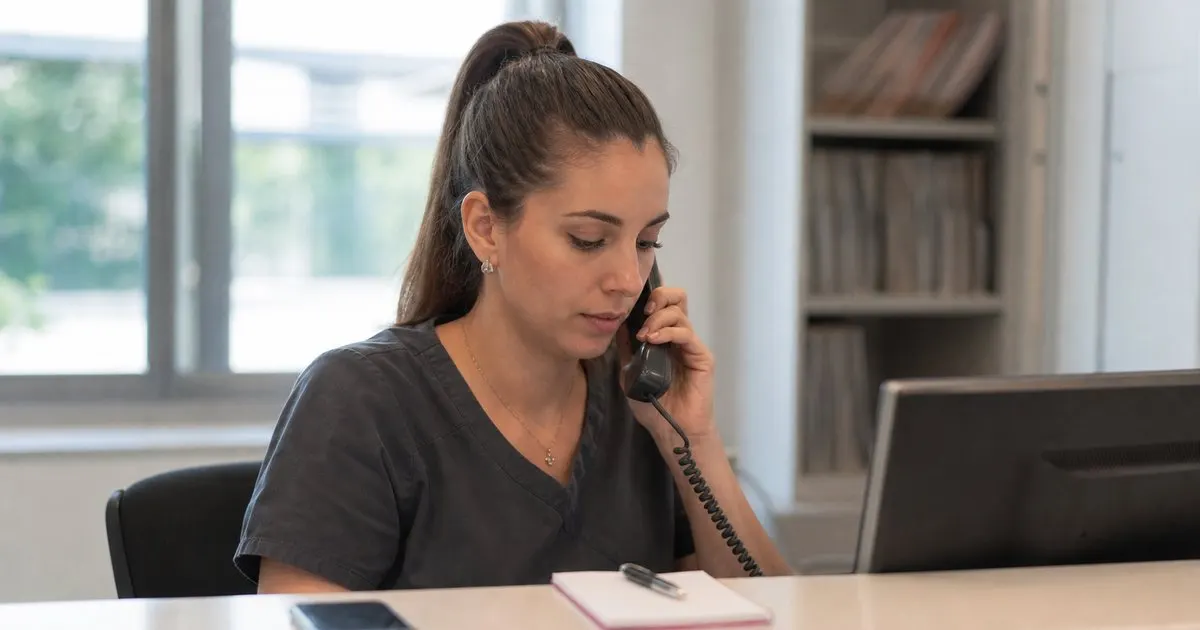
A personal call is expensive in staff time and cannot be automated well without annoying people. That makes it the right tool for a narrow group: patients with a clinical reason to be seen soon, patients who did not respond to a text and an email, older patients who told you they prefer a call, and patients whose contact information may be wrong. A two-minute conversation can rebook someone that three automated messages could not.
Calls also surface information the other channels hide. A staff member who reaches a voicemail that belongs to someone else has just found a bad phone number. A patient who says they moved has just told you to close the file rather than keep messaging. Record the outcome of every call in the recall tool so it does not queue another automated attempt to a number you already know is dead.
Put the channels in an order and stick to it
The practical sequence for most practices is three or four touches over roughly a month: a first text a few weeks before the due date, an email a week or so later if there is no booking, a second text around the due date, and a call a week or two after that for the patients who still have not responded and who meet a priority threshold. Each step should check whether the patient already booked before it fires. The sequence should also respect what the patient told you: if they asked for email only, the text steps get skipped.
Mail still has a place for practices with older patient populations or for patients with no valid phone or email, but it is slow and costly and works better as a once-a-year safety net than as a regular step. Whatever order you choose, write it down, configure the recall tool to follow it, and review the numbers a few times a year to see which step is doing the work and which one is just adding noise. Related: Building a Recall System That Works
- Text messages are the fastest first touch for opted-in patients but should stay short and free of clinical detail.
- Email carries the explanation and the booking link, and suits patients who asked for it.
- Reserve phone calls for high-priority patients, non-responders, and cases where contact information may be wrong.
- Run the channels in a written sequence that checks for a booking before each step and honors patient preferences.

Julien Jimenez
Julien Jimenez is an independent software builder based in Paris. He designs, ships, and operates focused SaaS products for small businesses and independent professionals. Read the full author page.
Bring patients back in when they are due
Recall reminders for patients due for a checkup. DueVisit is built to help you put this into practice.
Fill my scheduleMore from the DueVisit blog
Why Patient Recall Matters for Care and Revenue

Building a Recall System That Works
Reminders That Patients Appreciate, Not Resent
Get the DueVisit playbook
Practical guides on patient recall, straight to your inbox as we publish them. No spam, unsubscribe any time.